
Why They Don’t Self-Heal — Plus the Newest Options for Non-Surgical Joint Pain Relief
Millions of people struggle every day with joint pain, stiffness, and loss of mobility. Whether it’s knee pain, back pain, neck pain, shoulder pain, or osteoarthritis in the hips or hands, the question patients ask most is:
“Why can’t my joints just heal themselves?”
It’s a fair question.
Cuts on your skin heal. Bones heal. Even muscles heal.
So why do joints not fully recover — and often get worse year after year?
Today, we’re breaking down the real science behind degenerative joint pain, why joints don’t self-repair, and why modern regenerative medicine offers one of the most promising paths for long-term, non-surgical relief.
Why Joints Degenerate Over Time
Joint degeneration is more than “aging.” It’s a biochemical and mechanical cascade that destroys cartilage faster than your body can rebuild it.
Here are the main reasons joints break down:
1. Limited Blood Supply
Healthy tissues need blood flow to deliver oxygen, nutrients, and repair cells.
Cartilage has almost no direct blood supply, which means:
- Slow healing
- Limited nutrient delivery
- Poor natural regeneration
Once cartilage is damaged, the body has a difficult time repairing it — and that damage tends to compound over time.
2. Overactive Proteases (The “Termites” of Joint Degeneration)
One of the biggest discoveries in joint research is the role of proteases — enzymes that break down cartilage proteins.
In degenerative conditions such as osteoarthritis, protease activity becomes abnormally high.
Think of proteases like tiny termites eating away at the structure of your joint.
They:
- Break down collagen
- Destroy cartilage
- Increase inflammation
- Accelerate joint aging
- Trigger “bone-on-bone” progression
Without intervention, these enzymes continue to damage the joint year after year.
3. Chronic Inflammation
Inflammation is normal in small amounts, but chronic inflammation acts like an engine that never shuts off.
This leads to:
- Continued swelling
- Ongoing cartilage breakdown
- Increased stiffness
- Loss of joint lubrication
Over time, the joint becomes thickened, painful, and structurally weakened.
4. Mechanical Stress & Poor Movement Patterns
Everyday wear-and-tear can lead to:
- Meniscus tears
- Ligament injuries
- Cartilage thinning
- Compressive forces that damage joint surfaces
Once these structures weaken, degeneration accelerates.
5. Genetics & Metabolism
Your DNA, joint composition, body weight, activity level, and metabolic health all play a role in:
- How fast your joints age
- How well they respond to injury
- How aggressively inflammation affects them
Some people simply break down faster, even with similar activity levels.
Why Joints Don’t Self-Heal
Here’s the bottom line:
Your joints don’t have the natural tools needed to reverse cartilage damage once the process starts.
This is why early joint pain often becomes:
- Chronic pain
- Osteoarthritis
- Bone spurs
- Stiffness
- Grinding or clicking
- Weakness
- Mobility loss
This also explains why traditional treatment options often fall short.
Traditional Joint Pain Treatments (And Their Limitations)
Most patients are offered the same handful of treatments:
1. NSAIDs (Ibuprofen, Naproxen, etc.)
These medications can temporarily reduce inflammation and pain, but:
- They don’t treat the cause
- Long-term use can harm the stomach, liver, and kidneys
- They may accelerate cartilage breakdown over time
2. Cortisone Injections
Cortisone reduces inflammation but comes with significant downsides:
- Relief is temporary
- It may weaken cartilage
- Too many injections can speed degeneration
- Does not repair tissue or stop proteases
It’s a band-aid — not a solution.
3. Physical Therapy
PT can improve mobility and strengthen surrounding muscles, which is essential, but:
- It cannot neutralize proteases
- It cannot regenerate cartilage
- It cannot reverse degeneration on its own
PT is helpful, but incomplete when degeneration is active.
4. Surgery (Joint Replacement or Arthroscopy)
While sometimes necessary, surgery should be the last resort.
- Long recovery time
- Risk of complications
- High cost
- Doesn’t always relieve pain
- May require future revision surgeries
This is why more patients are searching for non-surgical joint pain treatments that actually target the root cause.
Regenerative Medicine: A Better, More Natural Approach to Degenerative Joint Pain
Modern regenerative orthopedic therapies work with your body’s biology instead of suppressing it.
These treatments aim to:
- Support healthy joint function
- Slow or stop degeneration
- Reduce the activity of destructive proteases
- Improve the joint environment
- Support better movement and mobility
Unlike traditional methods, regenerative therapies don’t just mask symptoms — they target the drivers of joint breakdown.
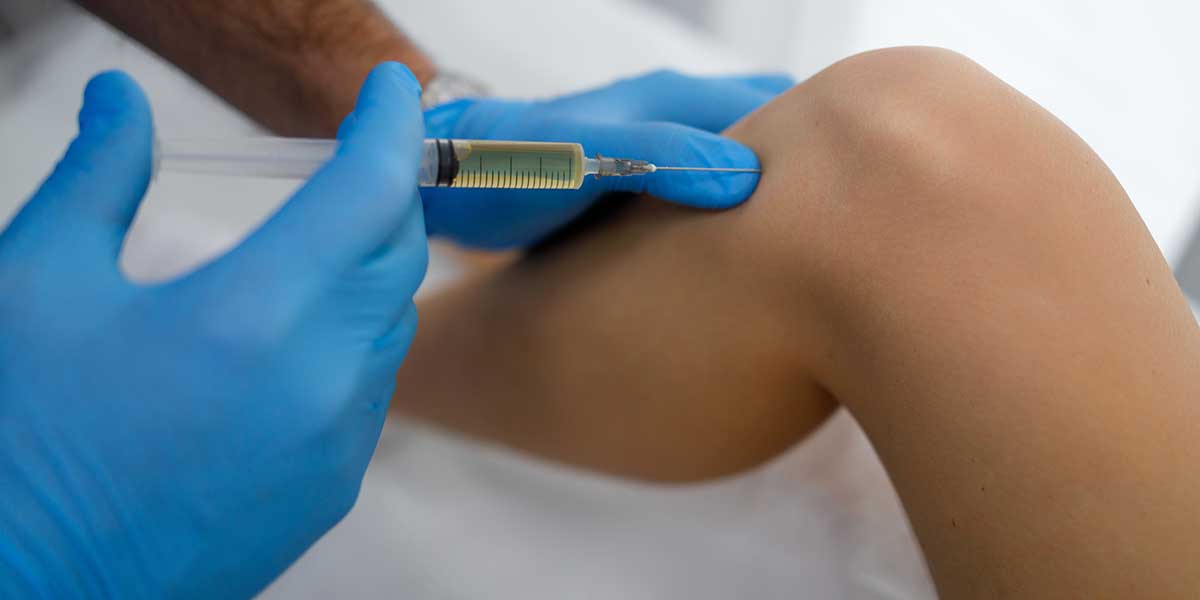
A2M: The Breakthrough Molecule for Degenerative Joints
One of the most advanced tools in regenerative medicine is A2M (Alpha-2-Macroglobulin) — a naturally occurring protein in your body with a powerful job:
A2M traps and neutralizes proteases — the enzymes destroying cartilage.
When A2M is injected into a degenerative joint, research shows it can:
- Reduce destructive enzyme activity
- Support joint stability
- Protect cartilage from further breakdown
- Improve the biochemical environment inside the joint
This makes A2M one of the most promising non-surgical treatments for osteoarthritis and chronic joint pain.
Other Regenerative Options
Depending on the individual case, providers may also use:
- PRP (Platelet-Rich Plasma)
- Wharton’s Jelly
- Amniotic-derived growth factors
- Therapeutic laser
- Joint decompression therapies
Each treatment is designed to support healing, improve mobility, and reduce degeneration — with fewer side effects than pharmaceutical or surgical interventions.
Why Regenerative Medicine Is Superior to Traditional Care
1. Targets the Root Cause
Instead of masking pain, regenerative medicine addresses:
- Cartilage breakdown
- Protease activity
- Mechanical joint stress
- Inflammatory pathways
2. Minimally Invasive
Most treatments are simple in-office procedures with no downtime.
3. Fewer Side Effects
Since many regenerative treatments use the body’s own molecules or biologically compatible materials, negative reactions are extremely rare.
4. Helps Preserve Your Joint
The goal isn’t just symptom relief — it’s protecting mobility and function for years to come.
5. Ideal for Patients Avoiding Surgery
Regenerative therapies help bridge the gap between physical therapy and surgical intervention.
When to Consider Regenerative Medicine
You may be a good candidate if you have:
- Knee pain
- Hip pain
- Neck pain
- Back pain
- Shoulder pain
- Degenerative joint disease
- Osteoarthritis
- Chronic stiffness or swelling
- Grinding, clicking, or popping
- Pain that keeps returning even after PT or injections
If joint pain is interfering with your life, your mobility, or your confidence, it’s time to explore options beyond temporary relief.
Take the Next Step Toward Relief
Your joints don’t heal by ignoring them — they heal by understanding what’s causing the pain and taking action.





Comments +